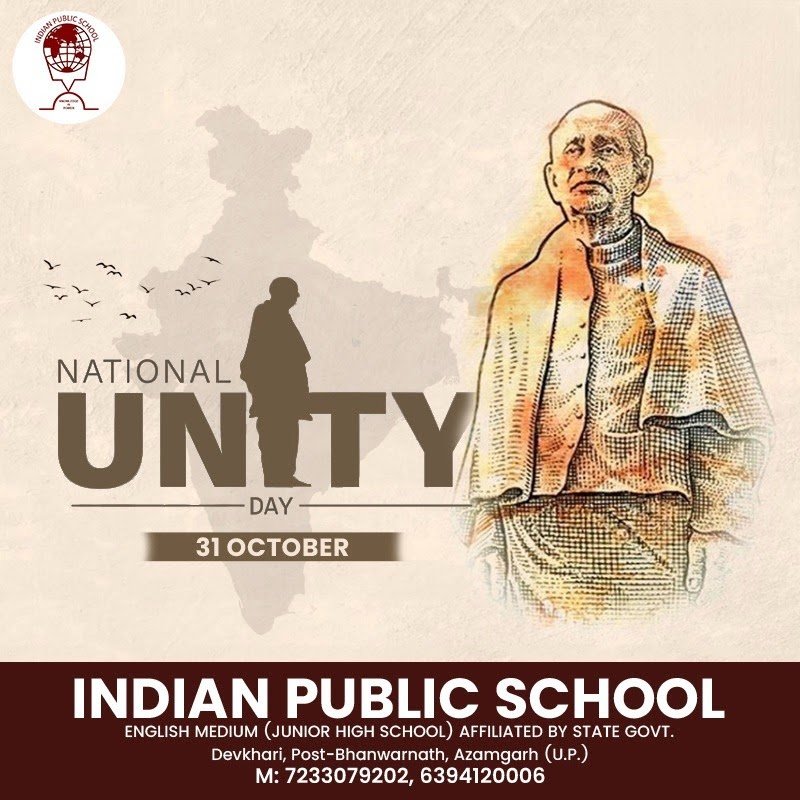
National Unity Day
Every year on October 31st, India celebrates National Unity Day (Rashtriya Ekta Diwas). This day is not merely a date on the calendar; it is a profound tribute to one of the nation's most towering figures, Sardar Vallabhbhai Patel, and a powerful reaffirmation of the fundamental principle that binds our diverse country together: unity. The observance began in 2014 to commemorate the birth anniversary of Sardar Patel, India’s first Deputy Prime Minister and Home Minister, recognizing his monumental and irreplaceable contribution to the country's cohesion. The Architect of Modern India: Sardar Patel's Legacy Often known as the "Iron Man of India," Sardar Patel was faced with a daunting task immediately following independence: the integration of over 565 disparate princely states into the Indian Union. Without his unwavering resolve, sharp political acumen, and extraordinary diplomatic skill, the map of independent India would have looked drastically different, potentially fragmenting into hundreds of small, unviable entities. Patel handled this challenge with firmness and tact, employing both persuasion (the carrot) and, where necessary, decisive action (the stick) to ensure the peaceful accession of almost all states. His vision prevented the balkanization of the country and laid the physical and political foundation for the strong, unified nation we know today. What Unity Means Today While Sardar Patel secured the territorial unity of India, National Unity Day serves as a reminder that the work is ongoing. Unity, in the modern context, does not mean uniformity. Instead, it is the beautiful harmony of a billion voices speaking in hundreds of languages, practicing diverse faiths, and celebrating varied cultures, yet all identifying as one people—Indians. It means upholding the constitutional values that protect every citizen, ensuring shared security, and striving collectively towards national progress. It is the commitment to look past regional, linguistic, or political differences when the sovereignty and integrity of the nation are at stake. Observing Rashtriya Ekta Diwas The spirit of National Unity Day is often captured in public participation and reflection: The Unity Pledge: Citizens across the country take a pledge to dedicate themselves to preserving the unity, integrity, and security of the nation. The Run for Unity: Symbolic runs are often organized to spread the message of national integration and promote the idea that, regardless of our differences, we run together toward a shared future. Tribute to the Statue of Unity: The world’s tallest statue, dedicated to Sardar Patel in Gujarat, stands as a permanent, powerful symbol of the unity he forged. This day challenges us to reflect on how we contribute to strengthening the nation's fabric. Are we tolerant? Do we respect differences? Are we committed to safeguarding the national interest? National Unity Day is a solemn promise we make to ourselves: to protect the sacred bond that holds our vibrant democracy together, honoring the man who built the house by diligently maintaining its walls. Let us carry forward the torch lit by the Iron Man of India, ensuring that the legacy of unity endures for generations to come.